skip to main |
skip to sidebar
 On the surface, Richard Linklater's film, Dazed and Confused, appears to be little more than another entry into the teen party-comedy genre, of which films are usually a dime a dozen. But it's Linklater, so you know there'll be more to it than that, and in fact there is - all that mid-70s nostalgia! Filmed in 1993, but set in '76, the movie focuses on an epic party on the last day of school. (Sound familiar, Superbad fans? Aside from the classic rock backdrop of Dazed, the two could be the same film.) The plot's nothing to speak of, but it doesn't have to be; the movie's many moments of sheer hilarity and eye-opening depiction of high school life in the 70s have got its back.
I myself was not a teenager, or in fact ALIVE in the 1970s, so I can't comment on the film's accuracy. However, I will say that if this IS accurate, I'm glad to have grown up when I did. Sure, everyone seemed to be on decent terms with each other in this, the time before cliques. But that said, certain personae make ones teeth grind to pure sawdust, so maybe it's a blessing to not have to deal with the likes of Parker Posey's dictator-esque cheerleader Darla, for example. Or better yet, Ben Affleck's O'Bannion, the senior who flunked on purpose so as to be able to terrorize freshmen for one more year. Charming.
In spite of these missteps, the rest of the ensemble cast is pretty terrific, and delivers laughs from all angles. Most of those laughs come from one Ron Slater (Rory Cochrane), who's destined for that certain plateau of greatness alongside Mike Damone and John Bender for teen comedy roles that transcend their meandering genre. Having known many a lazy stoner in my life, I can not only confirm the accuracy of Cochrane's performance but assert it as absolutely hilarious. Want proof? Check out his speculation on alleged cult involvement and marijuana use by, yes, George Washington.
Not a GREAT film by any means, but for one I wasn't expecting to like, Dazed and Confused certainly delivers.
2.5 stars out of 4
6/10
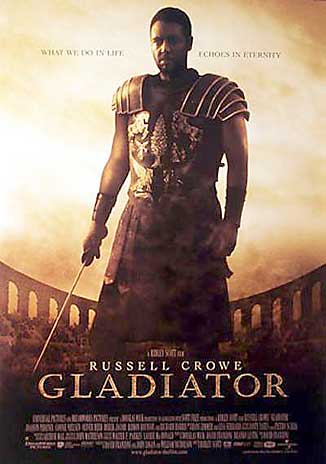
 Films must often be divided into two sub-categories. There are those that stand the test of time - not only enjoyable and praiseworthy upon first viewing, but many years ahead for and with future generations. Then there are the blockbusters, those movies made for summertime viewing - with action and mayhem often in the forefront and, in most cases, true quality on the backburner. With 2000's Gladiator, Ridley Scott gave us a gem that fit perfectly in the middle - all the roaring spectacle of a summer blockbuster in a film that could stand up and fight (no pun intended) among cinematic heavyweights of all generations.
The film occasionally gives us some effective emotional undertones throughout, but everyone knows the real reason to see Gladiator is its action sequences. Right from the get-go, we're thrust into battle as the Roman army, led by the general Maximus (Russell Crowe) under emperor Marcus Aurelius (the late, great Richard Harris) prepares to conquer the last resisting Germanic state to bring peace to the empire. While Crowe doesn't strike us as a natural hero, as both the scene and the film as a whole progress we discover that he's something far more valuable - an effective one. He has the gusto to slice and dice his way through the battles, while also maintaining dramatic sensibility in the calmer scenes.
His just and honorable conduct on and off the battlefield lead the dying Aurelius to bypass his own son, Commodus (Joaquin Pheonix) and declare Maximus the next ruler over Rome. This doesn't sit well with the power-hungry Commodus, and results in the son killing his father and forcing Maximus into exile.
What follows are two separate documents of rises to power. As Commodus tries various methods to divert the public eye from his shortcomings as a ruler, including re-introduction of gladiatorial games in Rome, Maximus works his way up as a slave and, eventually, a gladiator under his master Proximo (Oliver Reed). Through bonds formed with both his fellow slaves (Djimon Hounsou, Ralf Moeller) and his early match crowds, he's able to win over not just those around him, but us viewers as well - completely, in fact. "You have a great name," Hounsou's character Juba says at one point. "He must kill your name before he kills you."
The separation of the two primary characters works for a while, but is ultimately not as gratifying as their reunion. Maximus' reputation under the arena name "Spaniard" compels the emperor to demand a meeting with him. After this encounter, it's not just Commodus' villainous attempts to drag Maximus down (all handled rather admirably by Pheonix, if not a bit sissy-like at times) that keep our focus; the intertwining of their pasts and interactions between characters on both sides surpass that in both quantity and quality.
And as the movie's underwhelming last battle doesn't deliver, these such interactions end up saving the day, creating a fitting, emotionally grabbing ending. Actually, no. It's more than an ending; it's a conclusion, where an excellent film not only ends but caps off an epic journey, one that will undoubtedly be remembered among the greats in movies for years to come.
3.5 stars out of 4
8/10
 Stale
Stale
-impaired in vigor or effectiveness
(See also: The Life Aquatic with Steve Zissou)
It appears even Wes Anderson is not immortal. The offbeat genius responsible for the likable Royal Tenenbaums and The Darjeeling Limited misfires here, giving us a film devoid not only of his unique breed of hilarity but also of any reason to be viewed. What is meant to draw us in doesn't, and what is meant to make us laugh simply makes us question whether to get up and leave.
Bill Murray kicks on the autopilot as the washed up celebrity diver/filmmaker Steve Zissou. At the opening of the film, we see a screening of his newest film, during which his close friend and coworker Esteban gets eaten by a jaguar shark. Zissou's delivery of that news in the film is one of the few truly funny parts in The Life Aquatic - it's one of the few moments Murray breaks from his usual deadpan delivery, which - if not as reliable an approach - gives us something new to chortle at. At the post-screening press conference, he announces plans to seek revenge with his crew - Team Zissou - and kill the shark.
This revenge could have been a very enjoyable film-making pursuit, but instead comes off as a collection of wasted opportunities that get progressively worse as the film goes on. At one point, Team Zissou attempts to steal a myriad of expensive scientific equipment from Steve's rival, Alistair Hennessey (Jeff Goldblum, whose talent truly goes to waste), tripping the alarms in the process. What could have been a funny scramble against time, collecting anything and everything in sight comes and goes as two minutes of film we'd be better off without. A similar subplot situation with a pirate attack could have provided a spark to save the movie, but what we get is a bunch of explosions without any real added substance.
If anything keeps you watching, it's the technical aspects of the film. The production design is one of the few truly compelling parts of the movie, with both the on-location scenery and set filming particularly admirable. And through it all, the soundtrack - a collection of world-music adaptations of David Bowie songs - never fails to impress.
Unfortunately, that's just one piece of the pie, and a small one at that. The rest of The Life Aquatic is either untapped potential, wasted opportunities or some combination of both. The film takes "stale" to a new level, and should be viewed at one's own risk. Take heed; you've been warned.
1 star out of 4
2.5/10
 In most cases, a film must be judged by how good its actors make it, but this is one of the rare occasions where it's judged based on how good it makes its actors. The success of On The Waterfront comes from how charismatic and powerful it makes the oft-overrated Marlon Brando. His performance as Terry Malloy in the film, if not a bit over-hammed at times, is the perfect example of the power of one against many, and ultimately redeems the film of its somewhat predictable plot. As the film unfolds, he transforms from just another ordinary dock worker, blindly loyal to the mob running his career, into someone extraordinary - someone who stands up for what's truly right. To say Brando completes the change all on his own would be giving him too much credit - Eva Marie Saint (Edie Doyle) and Karl Malden (the town priest, Father Barry) are equally important to his development along the way. If there's any question as to the film's impact along the way, the final scene will ultimately crush it. It is truly one of the most powerful scenes in film history, and cements the status of On The Waterfront as a film not to be missed.
3.5 stars out of 4
8.5/10
 Sometimes, a movie defies all logic and just works. Zoolander is one of those movies. By no means a classic or even a classic of its genre, it is an excellent bit of satire about the modeling industry. Sure, the plot is a bit simple - at 89 minutes, it pretty much has to be. But in those 89 minutes, you'll get more belly laughs than most comedies. If anything, the movie's best means of identification is as one that showcases so many actors in their primes. Ben Stiller before tripe like Night at the Museum or The Heartbreak Kid; Owen Wilson before he became so hit-or-miss. And above all, Will Ferrell in one of his earlier big-screen roles - before he became Will Ferrell, the one-character wonder. Take their performances (along with some excellent cameos), some of the funniest one-liners you'll ever hear and pack it into something short and sweet, and you'll get Zoolander. You'll also get one hell of a time.
3 stars out of 4
8/10
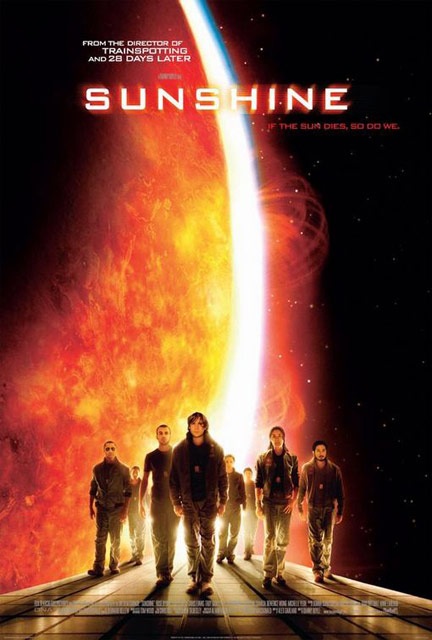
 Invincibility in the film-making industry is a rare thing. I'm starting to realize that with each new film I watch this summer. Even directors that produce classic after classic will have their duds - it's inevitable. And such is the case with the normally-reliable Danny Boyle. His latest film, the futuristic sci-fi adventure Sunshine simply doesn't achieve the same quality of his previous standouts Trainspotting and 28 Days Later. The reason? It's just too inconsistent, feeling at times like a great film and at others like a stinker.
In Sunshine, the year is 2057, and the Sun is dying. A group of astronauts is sent with a mission to deliver its payload and revive the star, saving humanity in the process. In this group, we have some Boyle veterans - Cillian Murphy and Rose Byrne - along with the ever likable Cliff Curtis, who contribute to the movie's enjoyable side. But at the same time, there is also Chris Evans, who should be kicked out of Hollywood and put into manual labor. The rest of the characters, unfortunately, receive too little screen time and thus we don't get that emotional attachment to them the way we traditionally do in Boyle films.
In these sort of sci-fi mission/adventure films, there will always be some conflicts, some more predictable than others. (The laws of movie-making with this genre deem it so.) But Sunshine takes that rule into overdrive. Around 2/3 of the way through, we get a plot twist so completely ridiculous that it makes M. Night Shyamalan look tame. It goes beyond unenjoyable; it's almost an insult to our intelligence. Its effect actually echoes one of Shyamalan's excursions - The Village, a film that's moderately enjoyable up until a certain point, at which point you're just too disgusted to watch anymore.
This is all something of a shame, considering that from a visual standpoint, the movie's a knockout. The depictions of the Sun and space in general showcases some top-notch CGI visuals. But as we all know, there's more to a movie than the visual aspect, and unfortunately it's in that land beyond that Sunshine falls flat.
1.5 stars of 4
4.5/10
 With movies based on true stories, success is essentially a coin flip. Some movies (insert any Disney sports flick here) follow a tried and true formula, mixing mostly accurate storytelling with just a pinch of Hollywood sentimentality to create something with near universal appeal. Others, like this year's 21 for example, change nearly everything to try and sell themselves as blockbusters - and still fail. Considering this, along with the hit-or-miss nature of director David Fincher, Zodiac could very easily have been a colossal failure.
Fortunately, it isn't. In fact, Fincher's retelling of the Zodiac murders in late-1960's San Francisco is nothing short of mesmerizing. He handles one of the most famous unsolved cases in history with such finesse that you'd think him a field expert on the matter. A solid group of performances by an excellent ensemble cast, combined with a unique approach to telling the story don't hurt, either.
The first part of the film is Zodiac in his prime. We pick up after his second murder, as the case begins to accumulate national significance. But it's after we're thrust several years ahead when the film really gets its wings. Robert Graysmith (Jake Gyllenhaal), a lowly cartoonist at the San Francisco Chronicle in Zodiac's early days, undertakes the mission of identifying the killer for a book he's writing. At this point, the subject shifts to his obsession with uncovering Zodiac's identity - which essentially becomes more damaging than any of the actual murders themselves. Jake Gyllenhaal handles this performance with a grace that allows me to finally forgive his abysmal career starter, Bubble Boy. Mark Ruffalo and Robert Downey Jr. have moxie, but Gyllenhaal ultimately steals the show.
At 157 minutes, the movie could have perhaps been trimmed a bit here and there. But the mysterious, thrilling nature of it all, combined with the excellent storytelling and production value, will keep your eyes glued to the screen. Zodiac is easily one of the best films of 2007. It's just a shame the Academy didn't realize that.
3.5 stars of 4
8/10