Saturday, May 31, 2008

Death at a Funeral (2007)


Comedy is an odd, and volatile thing. It handles certain adverse conditions (say, the intense warfare of David O. Russell's Three Kings) with such grace that you'd think the two went hand in hand on a normal basis. But then there's the mixture of comedy and mourning, which we see in Frank Oz's new film Death at a Funeral. Oz is no stranger to the genre, having previously honed his craft in films like Bowfinger and What About Bob? But this is a far more difficult trick to master, and as a result many of the jokes come off either in poor taste or as just plain unfunny.

An unnamed English family has recently lost its patriarch, and members from all over are arriving for the funeral. The way each one is worked into the storyline is admirable. Characters who would find themselves contributing little in any similar movies (the crazy old uncle, for example), are given chances to shine and take advantage. In particular, Kris Marshall (as the clumsy, but likable nephew, Troy) and Alan Tudyk (as the niece's boyfriend, Simon) were excellent casting choices. You're guaranteed some chuckles whenever they're on screen. The normally reliable Ewen Bremner, however, was slightly disappointing.

As the day goes progresses, stranger and stranger things begin to happen. The film uses an excellent sense of timing in presenting awkward situations, it's just that the ones they present don't always segue too well into forthcoming scenes. Also, certain characters (try as they might to win us over) just don't work well into the film at all. You're left wondering why they're there and who wrote them in. But despite the chaos and confusion throughout the film, Oz delivers a fitting, if not predictable ending.

Make no mistake, Death at a Funeral does have its moments. To sit through the entire movie and not get at least a couple of chuckles is to not have a pulse. But in general, this was far too ambitious an effort for even a veteran like Frank Oz. Use caution.

2 stars out of 4
5/10

Friday, May 30, 2008

South Park: Bigger, Longer & Uncut (1999)


You've gotta love an underdog. These days, it seems odd to consider South Park an "underdog" in anything, the program having been a Comedy Central heavyweight for more than 10 years. But Bigger, Longer & Uncut came out in 1999, when the show was less than two years old, and still very much focused on potty humor. Such an undertaking must have seemed more than a bit risky at the time, but looking back, it was a blessing. It allowed creators Trey Parker and Matt Stone to use their unconventional methods to create a smart, enjoyable political satire and one of the most surprising films of the year. (Come on, would most people really have expected anything remotely quality from a show whose first episode involved an extraterrestrial anal probe?)

Part of the success comes from the hilarious musical numbers dotted throughout the 80-minute film, which, unlike many Broadway pieces, don't induce headaches. After the cheerful opener "Mountain Town," the four boys - Stan, Kenny, Kyle and Cartman - go to the movies to see an R-rated film of their own favorite TV show, Terrance and Philip. Predictably, their parents find out and proceed to launch an all-out war against Canada. Through it all - Canadian attacks on B-list American acting families, a song called "Uncle Fucka" and even a relationship between Satan and Saddam Hussein - Parker and Stone manage to make the movie fly by and leave you wanting more at the end.

Cameos by George Clooney, Eric Idle and Mike Judge are a treat, but such is the level of entertainment of the movie that they're really unnecessary. Bigger, Longer & Uncut would get by on its own, a gut-busting blend of the South Park you'd see on TV and more intelligent, politically-tinged humor. (Of course, we'd get more of the same later, with Team America - World Police, but the puppets ultimately can't match Parker and Stone's original brainchild.)

Seeing this after seeing last summer's Simpsons Movie flop casts South Park into a league of its own - it's a TV show that succeeds in a big-screen adaptation. The Simpsons took too long to make the jump- after 18 years, there's really only so many risks you can take without damaging the name. Some might bring up Mike Judge's Beavis and Butthead Do America, which I'll admit was a very likable adaptation. But the difference is that Beavis and Butthead still felt very much like an extended television episode. South Park ambitiously took the next step - it transcended its television roots and was truly a MOVIE, and an excellent one at that.

3 stars out of 4
7.75/10

Wednesday, May 28, 2008

Indiana Jones and the Kingdom of the Crystal Skull (2008)

Nineteen years is a curiously long time to wait between sequels. It's essentially a generation gap, where characters can either pick up right where they left off or change dynamically into the older, wiser people their actors have become. Harrison Ford's Indiana Jones is somewhere in the middle. His hair has grayed considerably since the last Indiana Jones flick, Last Crusade, but his spirit and sense of adventure remain as bright as ever. Without these, Indiana Jones and the Kingdom of the Crystal Skull would almost certainly fall flat on its face.

This latest installment starts us off with Indy up to his old tricks - he's stuffed in a trunk with his sometimes-pal Mac (Ray Winstone) by some new adversaries - Russian communists. (It IS 1957, after all.) After he meets their leader, Irina Spalko (Cate Blanchett - unlikable as ever) we learn, to some degree, of Indy's quest - he must track down the mysterious crystal skull to prevent it from reaching the wrong hands. But the limited capacity in which this is revealed, combined with the poor overall execution of the scene render it completely unnecessary.

Without spoiling too much, the crystal skull leads them into territory you wouldn't expect to find in Indy's world.
The nature of the film's plot mirrors the nature of the film itself: people going in a direction that, perhaps, they shouldn't.

The rest of the film is what you'd expect, loaded with stunning visuals and starring a bigger cast than ever before. The feel of the filmmaking is still there, but the underlying spirit that carried the past films to success (even the mediocre Temple of Doom) is all but gone. Crystal Skull must instead rely on a CGI overdose and far too many cheap one-liners to get by, and it suffers as a result.

Seeing John Hurt reduced to mere code speech for much of the film kills a part of the soul inside, and Shia LeBoeuf still hasn't reached that point where I'll stop thinking of him as "annoying ex-Disney Channel star" and start considering him a serious actor. But fortunately, the movie's all about Ford - charismatic as ever and fit enough to make us think Spielberg and Lucas took 19 months off after Last Crusade, instead of 19 years. But while Ford's aged gracefully, he's the only one who has - and ultimately, that's not enough to save this one.

2.5 stars out of 4
6 out of 10

Monday, May 26, 2008

Three Kings (1999)


It's kind of an odd experience watching a movie about the first Gulf War as we're locked indefinitely into the second. It's even more so when said film mixes equal parts warfare and comedy - two elements most people would probably not put in the same sentence. But maybe it's this "road less traveled" approach that makes David O. Russell's Three Kings such a success. You've not seen anything quite like it before, and probably won't again for a very long time.

The story focuses around four soldiers (George Clooney, Mark Wahlberg, Ice Cube and Spike Jonze) taking an excursion to one of Saddam Hussein's hidden bunkers to steal his already-stolen Kuwaiti bullion ("You mean them little cubes you put in hot water to make soup?" asks Jonze's hillbilly character, Conrad Vig). But along the way, they are forced into the conflict between the rebels and Saddam's loyalist soldiers, and a mission motivated solely by greed becomes helmed by a different phenomenon - conscience.

The dialogue between the four soldiers, along with the kooky side mission involving journalist Adriana Cruz (a "five-time Emmy runner up") provide an interesting touch. You'll laugh in places you'd never think possible. But at the same time, the serious undertones of war are ever present to remind us that it's not all fun and games. This balance creates one of the most unique movie-going experiences you'll ever see, and a truly enjoyable film.

3 stars out of 4
7.5/10

Thursday, May 22, 2008

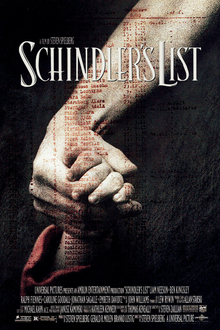
Schindler's List (1993)


An uplifting story from one of the most utterly depressing periods of history. Very rarely do I stumble across a film that moves me to tears, but this was one of them - and at the same time, it's so beautifully crafted that you can't look away. I suppose that, like its protagonist, the movie really is that complex. Only the length drops this from a 10/10. (It's hard to find 3 hours and 15 minutes to sit and watch it.) I won't say any more - just trust me and see this film.

4 stars out of 4
9.5/10

Wednesday, May 21, 2008

Into the Wild (2007)


Though not completely without flaws, Sean Penn's adaptation of Jon Krakauer's book Into the Wild is a truly powerful film. Shot beautifully in locations ranging from Alaska to Arizona, it tells the true story of Christopher McCandless (Emile Hirsch), an early 90's college graduate who took the road less traveled following commencement. After giving his $24,000 savings to Oxfam, McCandless hit the road under the name of Alexander Supertramp, working various different jobs with the ultimate goal of reaching the Alaskan wilderness.

Admittedly, some actors are better here than others. Catherine Keener and Hal Holbrook, for example, give honest, real performances that shake you to the core. (Coincidentally, the bonds between their characters and Hirsch's are the strongest in the film.) But on the opposite side of things, there are Kristen Stewart (supposedly attracted to Chris/Alex, but seems to be in a coma throughout) and Vince Vaughn, who plays...well, essentially, Vince Vaughn. It is a testament to Hirsch that he can work consistently around such an uneven group of performances. He handles the role with the grace of an actor twice his age.

Hirsch's interactions alternate with scenes of his isolation in the wilderness. This constant jumping from past to present was a questionable tactic on Penn's part. At times, there are scenes of high magnitude whose impacts are effectively numbed by a quick change of scene and context. It never truly kills the emotional content, but it certainly doesn't enhance it, either.

The true power of the film comes from a line from the early-going. As he arrives in his new-found "Magic Bus," McCandless says:

"No longer to be poisoned by civilization he flees, and walks alone upon the land to become lost in the wild."
-Alexander Supertramp, May 1992

To assume that McCandless would want or expect all of us to view civilization as a poison would be naive. That's not his message, nor is it the one Penn or Krakauer set out to convey. Rather, their story serves to make us analyze our own lives, questioning the merits of some aspects while finding deeper value in and appreciation for others. Through not just his journey, but also the relationships forged and lost along the way, we discover in McCandless and in ourselves a new way of looking at life.

The movie may not change us, but it gives us something to consider.

3 stars out of 4
7.5/10

Monday, May 19, 2008

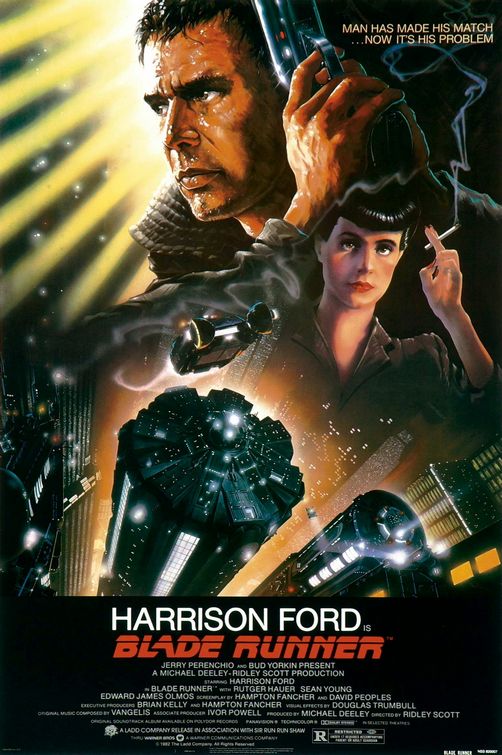
Blade Runner (1982)

If you can look past the über-cheesy production design of Blade Runner, you'll discover a film that transcends the typical dorkiness of science-fiction by establishing itself as a piece of art. Though Ridley Scott's futuristic vision doesn't quite matchup to that of his previous masterpiece, Alien, the rest of the movie is compelling enough to keep us interested, and then some. Though Harrison Ford received top billing as police specialist Rick Deckard, Rutger Hauer is the one to watch - truly a villain's villain as replicant Roy Batty. His performance here laid the groundwork for Nicholson's Joker and Hugo Weaving's Agent Smith, as well as countless other later villainous roles. The final battle between Roy and Deckard defines action cinema endings. It's what The Matrix wishes it could be - as reliant on action as on a hauntingly psychological dialogue between hero and villain. But then, Blade Runner is a film whose impact is not truly felt until the movie progresses - and once it hits, it hits hard.

3.5 stars out of 4
8/10